


 Help Center
Navigating Guangzhou's Xiaobei Market: A Street-by-Street Guide to African Grocery Stores, Hair Suppliers, and Halal Eateries
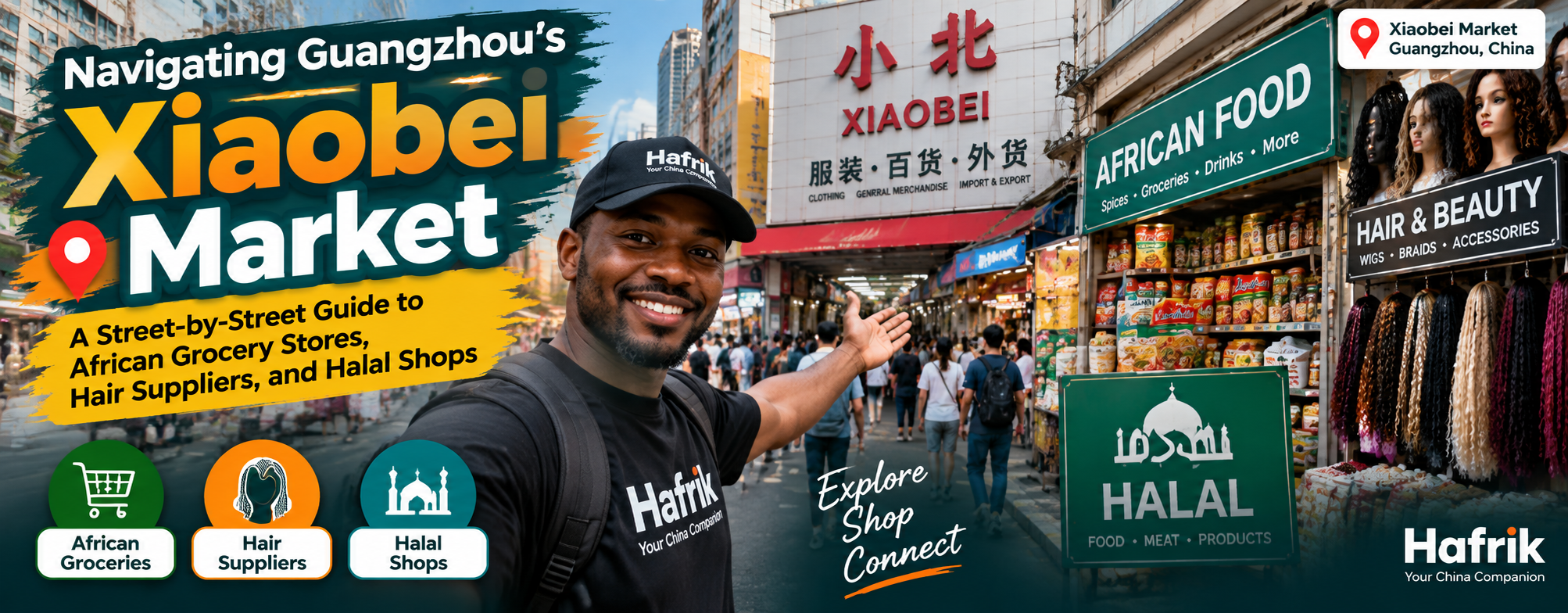
If you have ever stepped off the metro at Xiaobei station and walked up into the open air, you already know the feeling. The smell of grilled suya mixing with fresh bread from a Yemeni bakery, Lingala and Wolof and Arabic all bouncing off each other in the same five metres of pavement, a Nigerian aunty haggling over the price of stockfish while a Guinean trader counts out yuan for a bag of attieke flour. Xiaobei is not just a market. For thousands of Africans living in or passing through Guangzhou, it is the closest thing to home that exists in southern China. But it is also confusing the first time you go, a maze of alleys, malls, and side streets where the good stuff is often hidden behind unmarked doors. This guide breaks it down street by street so you can actually find what you're looking for instead of wandering in circles.
Getting oriented: the two axes of Xiaobei
Most people arrive via Xiaobei metro station (Line 2), Exit B or D depending on which side you need. The neighbourhood itself sits in Yuexiu District and is often called "Chocolate City" by locals and expats alike, a nod to the concentration of West and Central African, and increasingly East African, residents and traders. The area is roughly organised around two main corridors: Guangyuan Xi Road, which runs east-west and hosts a lot of the wholesale trading buildings and formal shopping centres, and the smaller side streets and alleys branching off Xiaobei Lu itself, where you'll find the more informal grocery shops, hair suppliers, and eateries squeezed between residential buildings. Knowing this basic layout saves you a lot of frustration.
The grocery stores: where to actually find your ingredients
For African groceries, the cluster of small shops along the lanes just north and east of Xiaobei Lu, particularly around what locals sometimes call the "Tianxiu" area, is your best bet. Tianxiu Building itself is famous mostly for trading offices and fabric, but the ground-floor and adjacent street shops sell dried fish, palm oil, cassava flour, plantain, egusi, and imported spice mixes that have made their way from Lagos, Accra, Dakar, or Nairobi through complicated supply chains involving Guangzhou's port and a lot of patient shopkeepers. Prices here are generally higher than what you'd pay back home because of import costs, but they are far more reasonable than what you'll find in international supermarkets in Tianhe or Zhujiang New Town. Bargaining is expected and usually good-natured, especially if you speak even a little Mandarin or if the shopkeeper is from a country where French or English overlaps with yours. A good rule of thumb: shops run by Guinean, Malian, or Senegalese traders tend to stock West African staples reliably, while some smaller stalls run by Chinese Muslim traders (Hui community) specialise in halal meats and Middle Eastern or East African ingredients like injera flour and berbere spice.
Hair and beauty suppliers: the real maze
This is where Xiaobei genuinely rewards patience. The hair trade here is enormous, much of it wholesale, feeding not just local braiders and salons but shipments back to Africa and Europe. The bulk of hair suppliers cluster in and around the multi-storey trading malls just off Guangyuan Xi Road, several of which have entire floors dedicated to wigs, weaves, closures, and extensions in every texture and length imaginable. Don't be put off by buildings that look purely industrial or commercial from outside; take the elevator up rather than assuming the ground floor is all there is. Many of the best deals on bulk human hair, especially Brazilian, Peruvian, and Malaysian textures re-exported through Chinese suppliers, are found on the third and fourth floors of these buildings, where individual vendors rent small booths. It is normal to ask to see certification or origin information if you're buying in bulk for resale, and it is normal to negotiate hard, particularly if you're buying more than one unit. Alongside the hair itself, you'll find sections selling edge control, hair food, bonnets, combs, and other accessories, often at prices that undercut what's sold in salons elsewhere in the city. If you're a first-timer just looking for a single unit for personal use, smaller street-level shops near the main Xiaobei intersection are friendlier and less overwhelming than the wholesale towers.
Halal eateries: eating well in Xiaobei
Food is arguably where Xiaobei shines brightest. Because the area has a significant Muslim population, both African and Hui Chinese, halal eating options are everywhere, ranging from tiny hole-in-the-wall stalls to proper sit-down restaurants. Along the smaller lanes east of the main road, look out for Yemeni and Somali-run restaurants serving mandi (spiced rice with slow-cooked lamb or chicken) alongside fresh flatbreads baked in clay ovens right at the shopfront; the smell alone will guide you. West African restaurants, often run by Guinean or Senegalese owners, serve thieboudienne, fufu with light soup, and jollof variations that spark the same friendly debates you'd get back home about whose version is correct. Nigerian-run spots are common too, dishing out pepper soup, suya, and pounded yam, and many stay open late into the night, which matters if you're arriving from a long shift or a delayed flight. A useful tip: places with handwritten Arabic or French menus taped to the window, rather than glossy printed ones, are often the most authentic and the best value, though they may not have English menus, so a bit of pointing and smiling goes a long way. Street vendors grilling meat skewers in the evening are a Xiaobei institution in themselves, and standing around one of these carts chatting with other customers is often how newcomers make their first friends in the city.
Practical tips for a smooth visit
Go on a weekday morning if you want to browse without heavy crowds, particularly for wholesale hair shopping where vendors have more time to talk prices. Weekends, especially Sunday afternoons, are livelier and more social but also more crowded and rushed. Carry cash in smaller denominations, though WeChat Pay and Alipay are increasingly accepted even by small vendors, and it's worth setting these up if you plan to shop here regularly. Basic Mandarin numbers and a few polite phrases go a long way, even in a neighbourhood where English, French, and Arabic are all commonly spoken among the trading community. Be mindful that police checks do happen periodically in the area, so always carry your passport or residence permit. Finally, treat the shopkeepers and vendors with the same respect you'd want shown to you; many have been trading in Xiaobei for over a decade and have seen the neighbourhood through good times and difficult ones, including the well-documented periods of tightened immigration enforcement, and they appreciate customers who see them as more than just a transaction.
Why Xiaobei matters beyond shopping
Beyond the practical business of finding fufu flour or a decent unit of hair, Xiaobei functions as a genuine community hub. It's where new arrivals get their bearings, where informal information networks about visas, housing, and jobs pass from one trader to another, and where the African diaspora in Guangzhou maintains a visible, resilient presence despite the ups and downs of policy and public sentiment over the years. Walking these streets, you're not just shopping, you're participating in a small but significant chapter of South-South connection that rarely gets covered outside academic papers and news documentaries about "Chocolate City." Next time you're heading to Xiaobei, give yourself more time than you think you need, wander down the alleys you'd normally walk past, and don't be afraid to ask questions. Chances are, someone from your own country is running a shop just around the corner, waiting to make you feel a little more at home.

🚀 Promote Your Hustle
Whether you sell food, fix phones, or cut hair — Hafrik helps you grow. Free business pages now open!
Create Page Russian
 English Language
 Arabic
 French
 Spanish
 Portuguese
 Deutsch
 Turkish
 Dutch
Dutch
 Italiano
 Romaian
 Portuguese (Brazil)
 Greek
Greek