


 Help Center
📱 THE BUDGET REBELLION: Spending on Needs vs. Wants 🇨🇳💰
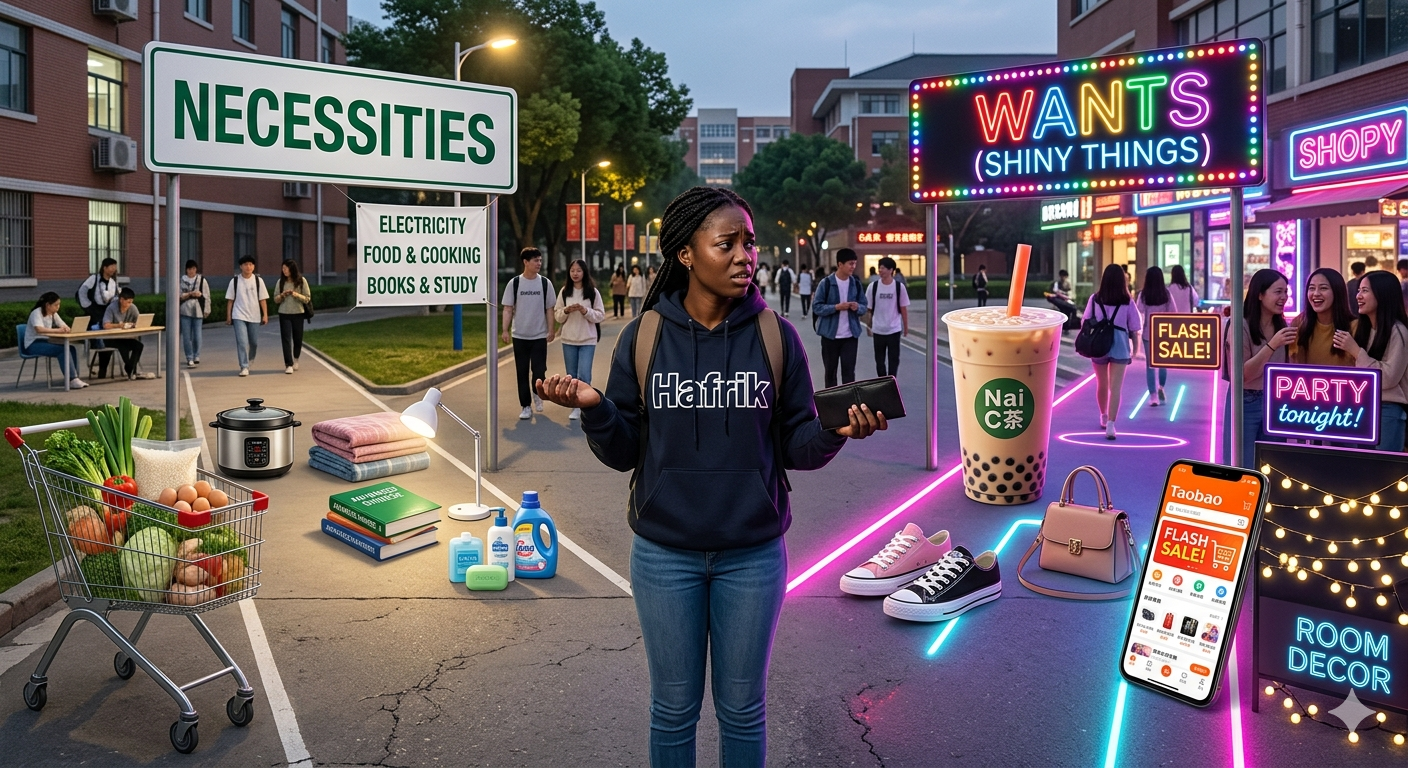
In the world’s factory, everything looks flashy, everything looks cheap, and everything is just one click away on your smartphone. But as a student, especially an international one, your budget is your lifeline.
The trap in China is the "0.9 RMB" illusion. You think 1 RMB or 6 RMB doesn't matter. But if you buy 10 of those "little" things, you’ve lost a whole meal. Those tiny expenditures are the silent killers of your savings.
1. The "Senior Strategy": Mastering the Machine
I learned this the hard way. I used to buy a 20–30 RMB duck or chicken every month, and somehow, it would vanish long before the month ended. I was spending 300 RMB on food and running out, while I saw seniors spending only 250 RMB and having plenty left over.
The Secret? A Structured Plan.
Portion Control: Don't cook everything at once. Copy the seniors: share your meat into packages and freeze them. When it’s time to cook, take only what you need.
The Timetable: Write down a plan for dinner and lunch. Knowing what you will eat and when you will eat it stops the impulse to buy "flashy" snacks.
The Math of Pennies: 1 RMB here and 6 RMB there adds up fast. If you don't track the small stuff, you won't have enough for the big stuff (like electricity).
2. Needs vs. Wants: The Real List
The Necessities (The Foundation):
Shelter & Sleep: A good pillow, heavy blanket, and quality bedsheets. You can't study if you don't sleep.
Electricity: In China, no money = no AC and no light. This is your #1 priority.
Fuel: An electric cooker and raw ingredients. Cooking for yourself is the ultimate survival skill.
Daily Basics: Soap, toothpaste, and laundry detergent.
The Wants (The Excess):
Room Design: We all want a "cool" dorm, but room decor is a want for when you have extra money. If you're on a budget, keep it functional.
Flashy Fashion: If your clothes and shoes are doable and good, you don't need new ones to "fit in."
Unfunded Parties: Occasions not covered by the school are a "Social Tax" you shouldn't pay with your survival money.
3. The 4 Questions to Ask Yourself
Before you hit "Pay" on Taobao or Meituan, ask these questions to see if your "Engine" actually needs it:
"Can I survive the next 7 days without this?" (If yes, it’s a Want).
"Am I buying this because I need it, or because it looks flashy and cheap?" 3. "Does this item help me graduate or stay healthy?" 4. "Have I checked my timetable/plan to see if this fits my budget?"
💡 THE BOTTOM LINE
Being a student in China is about Strategic Survival. You aren't here to look flashy; you are here to build a future. When you spend on what you need, you buy peace of mind. When you spend on what you want, you buy stress.
Copy these methods, write down your plan, and protect your pennies!
FEED POST: The "Small Change" Trap 🛑💴
Taobao is calling, but your bank account is screaming. 😱
In China, everything is "cheap" until you add it all up. Are you spending on your Future or just your Feed?
The 300 vs 250 Rule: I used to run out of food money spending 300 RMB. Then I learned to portion my meat and write a timetable. Now, 250 RMB lasts longer than 300 used to! 🍗📉
The 1 RMB Illusion: 0.9 RMB feels like nothing. But 10 of those "nothings" is a meal gone. Watch the small coins. 🪙
Needs over Flash: Electricity and a good blanket beat "room design" and new shoes every time. ⚡🛌
Your budget is your freedom. Don't trade it for something flashy.
💬 COMMUNITY QUESTION:
"What’s your best 'Senior Hack' for saving money on food or electricity? Let’s help the new students out!" 👇

🚀 Promote Your Hustle
Whether you sell food, fix phones, or cut hair — Hafrik helps you grow. Free business pages now open!
Create Page Portuguese
 English Language
 Arabic
 French
 Spanish
 Deutsch
 Turkish
 Dutch
Dutch
 Italiano
 Russian
 Romaian
 Portuguese (Brazil)
 Greek
Greek